Movies are dangerous things. They make us fall in love with places we’ve never been and romanticize cities that smell considerably worse in real life. Otherwise rational people become convinced to spend thousands of euros chasing a feeling manufactured by a cinematographer, a carefully selected soundtrack and a small army of digital effects artists.
Of course, half of what we’re looking at is probably green screen, computer-generated scenery or a backlot in California. But never mind. The damage is done. The passport is out, the credit card is trembling and somewhere an airline executive is rubbing his hands together.
Here are some films that have made me want to pack a bag, buy a ticket and disappear into the world. Some are masterpieces. Others are cinematic garbage with spectacular scenery. Both can get the job done.
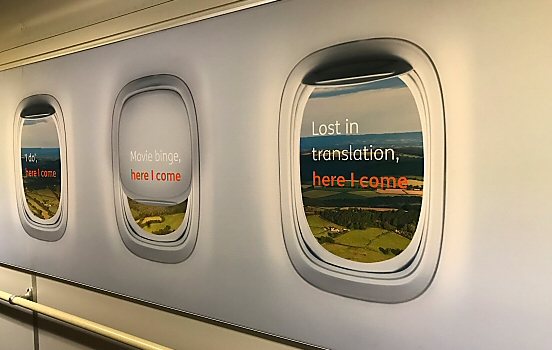 Even the airport billboards are luring you in.
- Lost In Translation: Sofia Coppola’s melancholic love letter to Tokyo remains one of the finest cinematic expressions of being wonderfully, gloriously lost. Bill Murray and Scarlett Johansson drift through the neon-soaked alienation of Shibuya and Shinjuku, two lonely souls finding an unlikely connection in a city that couldn’t care less about their existential problems. It’s a beautiful meditation on isolation, cultural disorientation and those fleeting encounters that somehow mean more than relationships lasting years. The film even inspired me to walk across half of Kyoto alone. Coppola’s follow-up, Somewhere, failed to capture the same magic, but at least it made the Chateau Marmont in Los Angeles look like a perfectly reasonable place to squander a small fortune while contemplating the emptiness of existence.
- Before Sunrise / Before Sunset / Before Midnight: Richard Linklater’s trilogy is essentially three films about two people walking around beautiful European cities, talking endlessly about love, life, and everything in between. Which sounds insufferable. Somehow, it isn’t. Ethan Hawke and Julie Delpy first wander through Vienna as idealistic young strangers, intoxicated by romance and the limitless possibilities of youth. Nine years later, they reunite in Paris, older, wiser, and considerably more burdened by the consequences of their decisions. By the time we reach Greece in Before Midnight, romance has been replaced by the considerably less photogenic realities of middle age. What makes the trilogy remarkable is that the actors actually age alongside their characters. No Hollywood trickery. Just time doing what time does best: slowly dismantling our illusions.
- The Secret Life of Walter Mitty: Ben Stiller plays a man who spends most of his life imagining extraordinary adventures while doing very little to make them happen. Then, finally, he gets off his backside. What follows is an unapologetically sentimental journey through spectacular landscapes in Iceland, where every mountain, waterfall, and winding road looks like a personal invitation to abandon your responsibilities. Sometimes all it takes is a beautifully photographed mountain and the suggestion that life might be happening somewhere other than your office cubicle.
- In Bruges: Two professional killers hide out in Bruges, a medieval Belgian city so absurdly picturesque that it looks like someone built it specifically to sell postcards. Colin Farrell spends much of the film complaining about the place, while the camera lovingly captures its canals, cobblestones and Gothic architecture. I suspect In Bruges has done more for the city’s tourism industry than a warehouse full of glossy brochures and smiling municipal officials. Not bad for a film about two miserable hitmen.
- Le fabuleux destin d’Amélie Poulain (Amelie from Montmartre): Paris has always been particularly skilled at selling a romanticized version of itself. Amélie took that talent and turned it into an Olympic sport back in 2001. Montmartre becomes a whimsical wonderland of cobblestone streets, eccentric characters, charming cafés and impossibly warm colors. The film practically smells of fresh croissants and unfulfilled romantic longing. Naturally, the real Paris comes with additional features: traffic, dog shit, indifferent waiters and tourists photographing the same doorway for hours. But that’s part of the charm, isn’t it? Jean-Pierre Jeunet’s Paris is a beautiful fabrication, and sometimes a beautiful fabrication is exactly what gets you on a plane.
- Le Grand Bleu: Luc Besson’s Le Grand Bleu is a hypnotic love affair with the ocean, featuring spectacular locations in Greece, Peru and even New York. It’s about diving, obsession, friendship and the dangerous attraction of a world beneath the surface. The Greek island of Amorgos looks particularly irresistible with whitewashed buildings, rugged coastline and water so impossibly blue it borders on obscene. If this movie fails to inspire you into diving, stay away from your tub for safety reasons. Do yourself a favor and watch the longer director’s cut.
- Talented Mr Ripley: Few films make murder, deception and identity theft look quite as appealing as Talented Mr Ripley. Matt Damon, Jude Law and Gwyneth Paltrow drift through 1950s Italy, from the sun-drenched islands of Ischia and Procida to the elegant streets of Rome and Venice. Everything is beautiful. The clothes, the boats, the cafés, the Mediterranean light. Even the moral bankruptcy comes elegantly packaged. It’s the kind of film that makes you want to buy linen trousers, order a Negroni and spend the afternoon pretending you have a trust fund.
- The Beach: Before social media turned every hidden paradise into an overcrowded circus, there was The Beach. A young Leonardo DiCaprio arrives in Bangkok, stays in a suitably questionable backpacker hostel and stumbles upon a map leading to a supposedly untouched tropical paradise. The first half perfectly captures the atmosphere of backpacking around Southeast Asia in the early 2000s: cheap guesthouses, questionable decisions, sweaty nights, and the intoxicating promise that something extraordinary might be waiting just beyond the next ferry terminal. The actual beach is Maya Bay in Thailand’s Phi Phi Islands, a place whose cinematic fame would eventually become something of a curse. There’s a certain irony in a film about escaping mass tourism helping to create precisely the thing its characters were trying to avoid.
- The Terminal: Aah, the familiar stench of airports. Tom Hanks plays a man trapped in an airport terminal, unable to enter the country or return home. The story was inspired by Mehran Karimi Nasseri, who spent sixteen years living at Charles de Gaulle Airport in Paris. Consider that the next time your flight is delayed by forty minutes and you start composing an angry message to the airline.
- Up In The Air: For those of us who have developed a peculiar affection for airports, endless transfers and the ritual humiliation of security checkpoints, Up In The Air offers a different kind of travel fantasy. George Clooney plays a man who has elevated frequent flying into a lifestyle philosophy. He moves through airports with the effortless precision of a seasoned professional, collecting loyalty points like military decorations and treating human relationships as inconvenient baggage. It’s a deeply cynical film about loneliness, detachment and the illusion of freedom. Somewhere, a frequent flyer is watching this film and quietly weeping over his elite status card.
- Lord of the Rings: New Zealand’s tourism industry owes Peter Jackson a rather substantial debt of gratitude. Before Lord of the Rings, the country was already spectacular. Afterward, it became Middle-Earth, and an entire generation of travelers suddenly wanted to hike through mountains, forests and rolling hills in search of hobbits. The landscapes are magnificent, even without the digital wizardry and mythical creatures.
- Vicky Cristina Barcelona: Woody Allen abandons his beloved Manhattan and relocates his neurotic characters to Barcelona, where everyone appears to spend their days discussing art, drinking wine and becoming entangled in complicated romantic arrangements. Scarlett Johansson and the rest of the cast drift effortlessly through beautiful apartments, sunlit streets, galleries and restaurants. The whole thing plays like a particularly expensive advertisement for Catalonia, with added infidelity and emotional instability. Barcelona has rarely looked so effortlessly seductive.
- Collateral: Los Angeles is a city that rarely gets the cinematic treatment it deserves. Too often, Hollywood presents it as a collection of beaches, palm trees, swimming pools and beautiful people with suspiciously little need for employment. Michael Mann’s Collateral offers something considerably more interesting. Tom Cruise plays a contract killer moving through the city at night, while Jamie Foxx drives the taxi that becomes his unwilling transportation. But the real star is Los Angeles itself. The endless freeways. The sodium-lit streets. The lonely diners. The vast urban sprawl stretching into darkness. It’s a cold, nocturnal portrait of a city that can feel simultaneously crowded and profoundly empty. Mann had explored similar territory in Heat and Miami Vice, but here the city becomes almost another character.
- Into The Wild: Based on Jon Krakauer’s book, Sean Penn’s Into The Wild tells the true story of Christopher McCandless, a young man who rejects conventional society and heads into the American wilderness. It’s a film about freedom, idealism, youthful arrogance and the seductive fantasy of escaping civilization. But there’s a darker truth beneath the romantic imagery. Nature doesn’t give a damn about your personal journey. The abandoned bus near Alaska’s Denali National Park became a pilgrimage site for travelers inspired by McCandless, an unsettling reminder of how easily tragedy can be transformed into tourism. A beautiful film, but perhaps not the best instructional manual for wilderness survival.
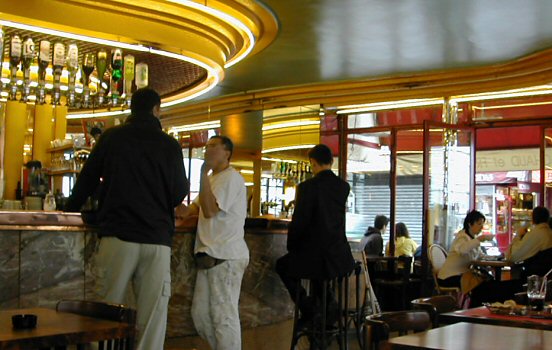 The bar Café des Deux Moulins in Montmartre, known from the Amelie movie.
Some films are worth watching not because they’re particularly good, but because the locations are.
The Jason Bourne films send Matt Damon careening through Paris, Berlin, Prague, New York, Madrid, London, and assorted other cities, usually while being chased by people with guns and an unhealthy disregard for traffic regulations. I’ve visited most of the movie locations, although clever editing often makes them surprisingly difficult to recognize.
James Bond has been doing much the same thing for decades, albeit with better suits, more expensive hotels and a travel budget just as unlimited as his ego.
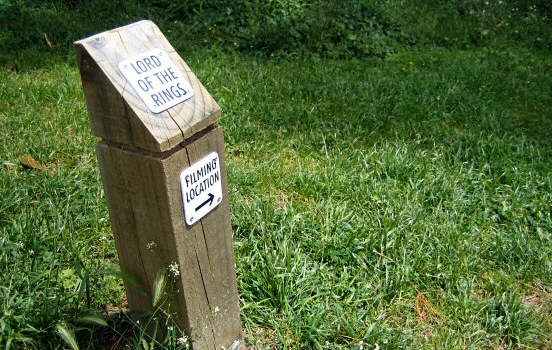 Lord of the Rings location in Wellington.
New York is another city that practically demands cinematic attention. Films such as Kissing Jessica Stein, Vanilla Sky, Taxi Driver, and Breakfast at Tiffany’s capture wildly different versions of Manhattan. Even Eyes Wide Shut manages to evoke New York, despite much of it being filmed on sets in England. Which says something about the power of cinema (or perhaps the gullibility of audiences).
Paris meanwhile continues its relentless campaign to convince the world that every street corner is a romantic revelation. Moulin Rouge and Midnight in Paris are particularly guilty of this, turning the city into a fever dream of nostalgia, passion, and carefully arranged lighting.
Some landmarks have become recurring characters in cinema. Take the giant Ferris wheel in Vienna’s Prater amusement park. It appears in The Third Man from 1949, The Living Daylights from 1987, and Before Sunrise from 1995. Three very different films, connected by one magnificent piece of engineering and a shared appreciation for having important conversations while suspended above the city.
Then there are films where a single scene is enough to inspire a journey. The Rules of Attraction features a frantic, lightning-fast trip through Europe that captures the chaotic thrill of travel better than many entire films devoted to the subject. And then there’s EuroTrip. A film of questionable artistic merit, to put it charitably, featuring a thoroughly fictionalized version of Bratislava.
Travel movies are rarely honest. They remove the delays, the queues, the stomach problems, the overpriced taxis and the tedious business of finding somewhere to sleep when everything is fully booked. They replace the ordinary with the extraordinary, turning complicated cities into beautifully composed sequences of perfect moments.
And that’s fine. Because sometimes all it takes is one scene. A deserted street in Tokyo. A sunlit Italian harbor. A rainy evening in Paris. A lonely highway cutting through the Icelandic wilderness. Something clicks and you remember that the world is enormous, strange and filled with places you haven’t seen yet.
And suddenly, sitting at home watching other people have adventures feels like a rather poor substitute for having one yourself. The film ends. The credits roll. The illusion fades. And you start looking at flights.
Comments
No comments yet.
Leave a reply