Sometimes movies inspire us to travel. We see some sun-drenched street, a suspiciously perfect beach or a shabby little bar where interesting people drink interesting things, and immediately think: I want to go there.
There is, of course, one small problem. Sometimes that place doesn’t exist.
Take Dexter for example. Our friendly neighborhood serial killer lives in a rather pleasant seaside apartment complex in Miami, at 103rd Street. Palm trees, blue water, sunshine, the sort of place where you might happily spend a week, provided nobody starts wrapping the furniture in plastic.
The building appears regularly throughout the series. But after the first few episodes, much of what looks like Miami wasn’t Miami at all. The production moved west and recreated the necessary bits in Los Angeles. In fact, a surprising amount of supposedly Floridian outdoor scenery was filmed in California.
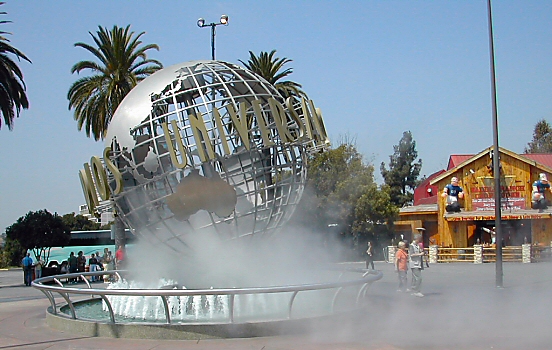 Universal Studios in Los Angeles.
The trick behind much of this fakery is green screen. Or blue screen, as we used to call it before green apparently won the chromatic war. We’ve all seen the behind-the-scenes footage. Actors stand heroically in front of an enormous green wall, staring intensely at a tennis ball on a stick while pretending it’s a angry dragon, exploding planet or emotionally complicated alien. Months later, armies, spaceships and entire civilizations are added around them, and everyone collects an award.
That sort of thing is hardly surprising. Nobody seriously expects Hollywood to construct an actual Death Star just so somebody can blow it up again. What’s more interesting, and slightly disturbing, is how routinely the same technology is used for completely ordinary scenes.
A street, an apartment building, a city skyline, a window. Things your brain accepts without question because there is absolutely no reason for them to be fake. And yet they are. That’s where green screen becomes genuinely impressive. Not when it gives us impossible planets and giant monsters, but when it quietly manufactures reality while nobody notices.
The video below demonstrates just how far this goes. Some of the examples are remarkable. Watch it at your own risk, though. Once you start noticing this stuff, movies become less “What a beautiful place” and more “I wonder which industrial estate in Burbank that actually is”. Another small piece of innocence, efficiently murdered by technology.
Related posts
3 comments
Leave a reply