Way Out West has settled into its role as one of those dependable summer rituals. A weekend where thousands willingly queue for overpriced falafel, wear ironic footwear and consume enough Aperol Spritz to keep the canals of Venice topped up.
I’m having none of that crap, as I’m here for the music. This year’s lineup belonged to formidable women. PJ Harvey reminded everyone why she’s been untouchable for decades. Grace Jones remained a force of nature. Nicole Sabouné delivered icy elegance. Chelsea Wolfe wrapped the audience in darkness. Peaches was… well, Peaches. Fearless, outrageous and completely impossible to ignore. Every one of them justified the steep ticket price.
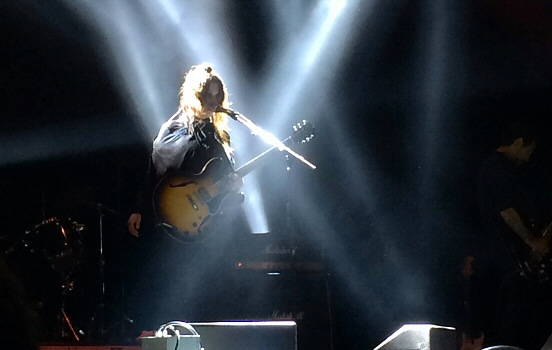 Chelsea Wolfe at Way Out West.
But my highlight wasn’t a band at all. It was Henry Rollins. I’ve seen his spoken-word performance several times over the years, yet this performance felt different and personal. The stage was small, the rain relentless, and for a while only a stubborn handful of us stood in the soaked grass refusing to surrender. Somewhere across the festival area, Massive Attack shook the grounds with enough bass to rearrange internal organs, but here Rollins simply talked. No backing band. No lighting tricks. Just stories and not even a fence between us.
He opened with a few deserved swings at Donald Trump before drifting into happier territory. There was the surreal lunch with his lifelong hero David Bowie, told with the excitement of someone who still couldn’t quite believe his own tale. Then came the story of sharing a flight with Lemmy from Motörhead, another larger-than-life character. I’d last seen Lemmy here at Way Out West in 2014, but less than two years later he was gone.
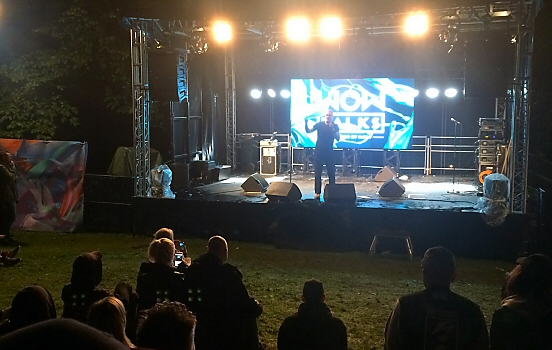 Henry Rollins in the rain.
Rollins shifted gears again, speaking about his brief role in Sons of Anarchy and the unexpected downside of playing a convincing villain. Apparently some viewers couldn’t separate fiction from reality, and strangers occasionally decided he deserved punishment for crimes committed by a fictional character.
As if on cue, reality demonstrated his point. A drunk man wandered up to the front and began shouting at him before security hauled him away. Rollins calmly remarked that he actually recognized the man. Years earlier, in Liverpool, the same guy had punched him in the stomach.
Then another heckler appeared. If you’ve ever seen Rollins fronting Black Flag, you know he isn’t exactly easy to intimidate. Still, even he looked momentarily drained by the interruptions. He paused, looked out over the audience and asked, almost to himself, “What is it with people tonight? Is it the alcohol?”. It was one of the few moments during the evening when the famously relentless Rollins seemed genuinely disappointed rather than angry.
I hope he comes back. Years ago I heard him say, “Home is death to me”. For Henry Rollins, the road isn’t an escape. It’s where life happens. Judging by that rain-soaked evening in Gothenburg, I hope he keeps choosing it.
Comments
No comments yet.
Leave a reply