Levison Wood is a British explorer, writer and photographer. The sort of man who looks at a map, spots a large and potentially unpleasant stretch of wilderness, and thinks: “I should probably walk across that.”
And walk he does. The Himalayas. The length of the Nile. Around the Arabian Peninsula. Places where most of us would happily accept the invention of trains, planes and air-conditioned automobiles, Wood approaches with a pair of boots and what appears to be a troubling resistance to common sense.
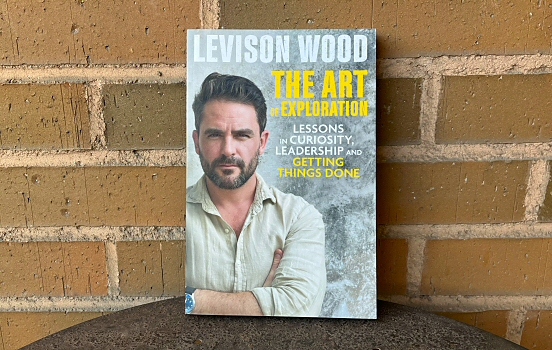
His expeditions have been documented in both books and television series. I’ve read several of his previous books, but The Art of Exploration is different. Rather than chronicling one particular journey through deserts, mountains or politically complicated border crossings, this one turns the compass inward.
Most of the planet was affected by the Great Pause, as we have already begun calling the strange year of 2020. Borders slammed shut. Airports emptied. Restaurants closed. Millions of people found themselves confined to their homes in lockdown, staring through windows and wondering exactly how many varieties of sourdough bread humanity really needed.
For someone like Wood, whose livelihood depends on actually going somewhere, this presented a fairly obvious problem. He begins the book by describing how the involuntary Covid hiatus affected him and other freelancers, many of whom watched their income evaporate almost overnight. And while documentaries, books and Google Earth can provide temporary relief, the immersive nature of real travel cannot be replicated from an armchair. You can watch someone cross the Himalayas in 4K, but your sofa is unlikely to give you altitude sickness, food poisoning or an unexpected encounter with a yak. I imagine there was a certain irony in writing a book called The Art of Exploration while being largely confined to your own backyard.
Several chapters deal with fear, risk and the explorer’s mindset. This is where Wood and I find ourselves on familiar philosophical territory. Some of his advice closely mirrors thoughts I wrote about in my own book, published two years before The Art of Exploration.
The basic idea is simple: humans are generally terrible at assessing risk. We happily drive to work every morning while worrying about terrorists in countries thousands of kilometers away. Statistically, you’re far more likely to end up in trouble during some painfully ordinary activity back home than to be kidnapped by masked lunatics while wandering through the Middle East.
That doesn’t mean being reckless. Quite the opposite. Know where you’re going. Understand the risks. Prepare properly. Pay attention. But don’t allow irrational fear to become the travel agent deciding where you can and cannot go. A little uncertainty is good for you. Occasionally being uncomfortable, lost, frightened or completely out of your depth is part of the deal. It reminds you that the world is bigger than your routines and that you are considerably less in control of things than you might like to believe. Prepare for the worst. Hope for the best. And then go.
“Fear is a primal biological reaction. This means it is very powerful, but also that it isn’t always suited to our modern lives.”
— Levison Wood
Wood also introduces us to inspirational figures including Sir David Attenborough, Amelia Earhart and Thor Heyerdahl. People who, in very different ways, refused to accept that the sensible thing to do was necessarily the interesting thing to do.
Not everything here feels new. Some themes will be familiar to anyone who has read Wood’s previous books, and occasionally The Art of Exploration feels like a greatest hits compilation of ideas scattered throughout his earlier work. But Wood is an engaging writer, and his enthusiasm is infectious. There is an optimism running through the book that makes you want to close it, pull a dusty backpack from the cupboard and start looking suspiciously at a map.
For more Levison Wood, his television shows are well worth seeking out. My personal favorite is Arabia (2017), in which he travels around the Arabian Peninsula, a journey through some of the most fascinating, beautiful and misunderstood parts of the world. I also recommend Walking the Himalayas (2015), Walking the Nile (2013) and Walking the Americas (2017). Watch a few episodes and you may find yourself studying maps differently.
Related posts
Comments
No comments yet.
Leave a reply