2020 was a magnificent shitshow. A year that managed to pack a global pandemic, climate catastrophes, political unrest, violent protests and a spectacular parade of human stupidity into twelve miserable months. And somewhere in the middle of it all, the President of the United States was suggesting that injecting bleach might be worth investigating. You couldn’t make this stuff up. Even the most deranged Hollywood screenwriter would have been told to dial it down.
By December, the entire planet was lining up to give 2020 a well-deserved kicking. It had become the world’s favorite punching bag. An iron piñata filled with disappointment, anxiety and the occasional existential crisis. Netflix even produced Death to 2020, a mockumentary featuring Samuel L. Jackson and assorted celebrities taking turns insulting the year from hell.
Time magazine slapped “Worst Year Ever” across its December cover. Historically speaking, that’s a rather ambitious claim. The Black Death of 1348 with with 200 million victims would probably like a word. But for most people alive today, 2020 was certainly a strong contender for the title.
And just when we thought we’d endured enough, the second wave arrived. Like an unwanted dinner guest who’d already vomited on the carpet but insisted on staying for another drink. I was beginning to sympathize with Frodo trudging through Mordor, “I can’t recall the taste of food, nor the sound of water, nor the touch of grass”. Except our Mount Doom was the local supermarket, and the One Ring had been replaced by a bottle of hand sanitizer.
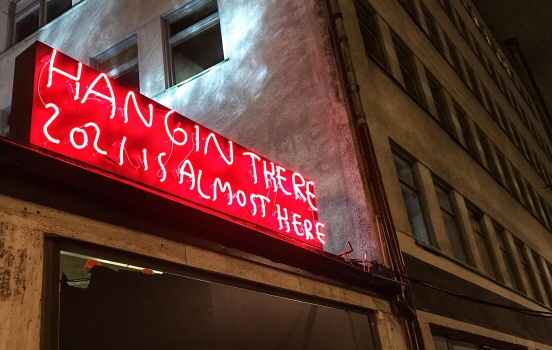 Wishful thinking on New Year’s Eve in Gothenburg.
Then miraculously the calendar flipped to January 1st. People congratulated each other on surviving. Somewhere, presumably, someone declared that everything would finally return to normal. And yet, the following morning, the world looked suspiciously familiar. The virus hadn’t packed its bags. The hospitals weren’t suddenly empty. The only noticeable change in the atmosphere was the unpleasant smell of leftover food drifting from the kitchen.
Funny thing about calendars. They’re human inventions, mathematical conveniences built around the movement of celestial bodies. The universe doesn’t give a damn whether it’s December 31st or January 1st. Viruses, unfortunately, don’t consult the Gregorian calendar either.
And what exactly is this normal everyone seems so desperate to return to? We had barely enjoyed two months of 2020 before the pandemic hit the fan. The rest was an extended exercise in uncertainty, social distancing and discovering just how many hours a human being can spend staring at a screen without losing the will to live.
As I write this, vaccines are finally being rolled out across the world. There’s genuine reason for optimism. Perhaps the first half of 2021 will resemble the second half of 2020, only played backwards, with things gradually reopening instead of shutting down. But there’s a more uncomfortable question lurking beneath all that optimism. Should we really want to return to 2019?
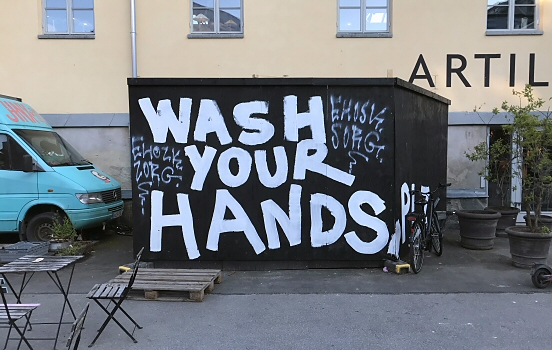 Tales from the apocalypse.
There is after all no vaccine for the climate crisis. No convenient injection to cure our addiction to consumption, cheap flights, disposable everything, and the comforting illusion that someone else will clean up the mess.
The pandemic has exposed some peculiar truths about our civilization. One of the most frequently repeated public health messages of 2020 was simply to wash your hands. Think about that for a moment. It apparently took a global catastrophe to remind grown adults of a basic hygiene practice that should have been mastered sometime around kindergarten.
And what happens when the immediate danger finally passes? Will schools rethink how they operate? Will working from home become a permanent fixture rather than a temporary inconvenience? Will people eagerly squeeze themselves back into crowded cinemas and sweaty concert venues, sharing body heat and questionable personal hygiene with complete strangers?
Personally, I hope so. At least when it comes to concerts. There’s something profoundly human about standing shoulder to shoulder with a few thousand people, united by loud music and the collective destruction of our hearing.
But travel presents another dilemma. Back in 2019, the world was practically begging us to go somewhere. Cheap flights, weekend escapes, Instagram-filtered beaches and exotic destinations served up like items on a fast-food menu. A few clicks, a credit card, and you could be eating overpriced food on another continent before the weekend was over. I was hardly immune to the temptation.
Now the airline industry is on its knees, with analysts predicting that recovery to pre-pandemic levels could take years. Perhaps this enforced interruption offers an opportunity to reconsider our habits. To travel more thoughtfully. Stay longer, consume less. Appreciate places rather than simply collecting them like trophies.
Or perhaps we’ll go straight back to business as usual, elbowing each other at airport security while complaining about the price of bottled water. Human nature is a stubborn bastard.
One thing 2020 has demonstrated rather convincingly is that a crisis doesn’t necessarily bring out the best in people. Sometimes it brings out generosity, compassion and extraordinary courage. Other times it reveals selfishness, ignorance and the sort of breathtaking stupidity that makes you wonder how our species ever mastered fire.
There’s an old saying that adversity builds character. I’m not entirely convinced. I suspect adversity reveals character. Much like alcohol, a crisis doesn’t necessarily transform people into something different. It simply turns up the volume on whatever was already there. The generous become more generous. The paranoid become more paranoid. And the assholes? Well, they tend to become spectacular assholes.
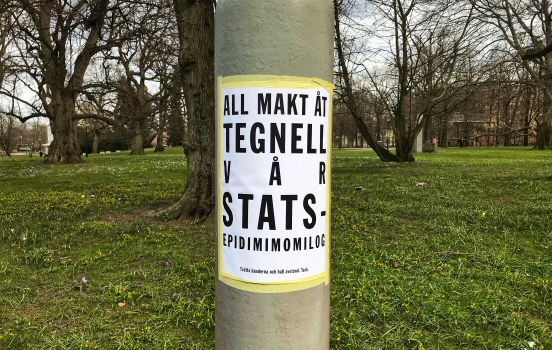 Very Swedish joke.
Fear has a remarkable ability to strip away the polite little fictions we tell ourselves about who we are. I’m not quite as devoted to Stoic philosophy as Ryan Holiday, but there’s something to be said for accepting what we cannot control and taking responsibility for what we can. Sitting around waiting for the world to repair itself seems like a particularly miserable way to spend whatever time we’ve been given.
As Shaun suggested, we could always head to the Winchester, have a nice cold pint and wait for this all to blow over. An appealing strategy of survival, but perhaps there’s a better approach.
Learn something. Read those books gathering dust on the shelf. Help someone who’s having a worse time than you. Make something. Fix something. Question a few assumptions. Do whatever reminds you that you’re still alive and capable of more than endlessly refreshing the news and counting infection statistics.
John Lennon once observed that “life is what happens to you while you’re busy making other plans”. He had a point. We’ve spent much of the past year waiting for life to resume, as though the present were merely an inconvenient commercial break before the main feature.
But this is life. Right here. The messy, uncertain, frequently absurd business of being human. We’ve been handed what some call The Great Pause. An extraordinary and unwanted interruption in the relentless machinery of modern existence. It would be a shame to emerge from it having learned absolutely nothing.
Humans are remarkably adaptable creatures. We get used to almost anything, given enough time. Things that once seemed unthinkable eventually become routine. Yesterday’s absurdity becomes tomorrow’s everyday inconvenience. And somewhere along the way, without ceremony or a grand announcement, the unfamiliar becomes familiar. The new normal. Whether it’s any better than the old one is largely up to us.
Comments
No comments yet.
Leave a reply