It’s been a few years since I read Prisoners of Geography by Tim Marshall, but 2020 seems like a particularly appropriate moment to drag it off the shelf again.
The world has stopped traveling thanks to the global pandemic. Borders have slammed shut, airplanes are sitting around looking increasingly pointless and most of us have discovered that the journey from the sofa to the refrigerator does not qualify as an expedition. So if we can’t go anywhere, we might as well read about why the world is such a complicated bastard in the first place.
This is a slight detour from my usual diet of travel narratives. There are no heroic backpackers, disastrous bus journeys or suspicious meals served in plastic bowls. Instead, Prisoners of Geography is about something considerably less romantic but arguably more important: mountains, rivers, oceans, deserts and all the other inconvenient lumps of geography that have been screwing with human ambition for thousands of years.
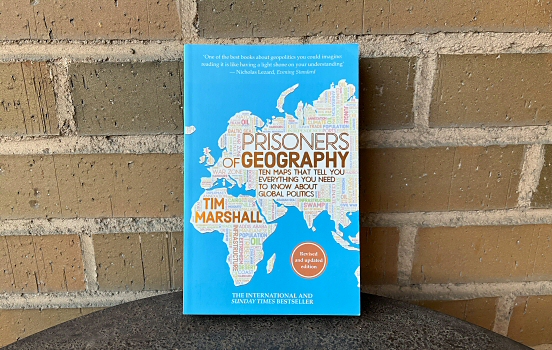
Marshall’s central argument is simple: geography matters. A lot. Politicians may make speeches, generals may draw arrows on maps and diplomats may spend endless evenings drinking bad coffee in windowless conference rooms, but eventually somebody discovers there is a mountain range in the way.
Looking at Google Maps, the world appears wonderfully manageable. There’s point A. There’s point B. Draw a line between them. Problem solved. Anyone who has actually traveled knows this is nonsense.
There are the Pyrenees. The Himalayas. The Tibetan Plateau. Vast deserts, frozen wastelands, jungles, oceans and rivers that stubbornly refuse to flow where politicians would find them most convenient. Geography doesn’t care about your five-year plan. And this is where the book gets interesting.
Why has Russia historically obsessed over access to warm-water ports such as Crimea? Why is Kashmir perpetually sitting on top of a geopolitical powder keg? How have Africa’s rivers, mountains and colonial borders contributed to its conflicts? Why is China increasingly interested in naval power and investing heavily across Africa? And why have the very different river systems of Europe and North America helped shape their economies and political development?
These are enormous questions, of course. Entire libraries have been written about each of them, usually by people with impressive academic titles and a worrying enthusiasm for footnotes. Marshall isn’t pretending to settle the arguments in a few hundred pages. What he does instead is give you a useful lens through which to look at the world.
Some of the examples are obvious. Others have been argued over, invaded, annexed and occasionally bombed for centuries. But putting them together makes you realize how much of history is influenced by brutally simple facts: where the mountains are, where the rivers flow, where the ports are, and who had the spectacular misfortune of being born on the wrong side of them.
Prisoners of Geography is not the final word on geopolitics. No single book could be. But it is an accessible, fascinating introduction to the idea that beneath all our flags, ideologies, treaties and grand political ambitions lies something much older and considerably less negotiable. The ground beneath our feet.
Comments
No comments yet.
Leave a reply