Everything is going digital. Laptops are getting smaller, phones are getting smarter, and somewhere in Silicon Valley a man in a black turtleneck is presumably plotting the eventual extinction of handwriting.
And yet, sometimes you don’t want to drag a laptop halfway across the planet just to write down the name of a place, a train number, or some profound observation that will look considerably less profound the following morning.
This is where the classic Moleskine notebooks comes in. Small, black, stubbornly analogue and held together by an elastic band, it is essentially a stack of paper with excellent marketing. And I love it.
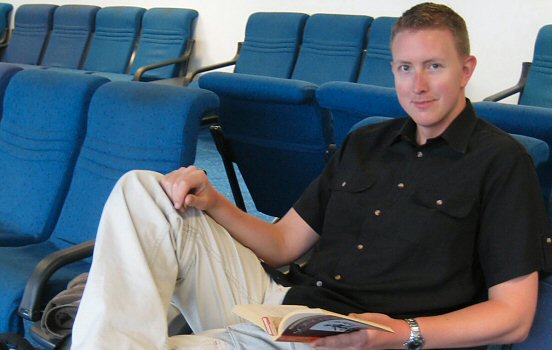 Gathering inspiration from Bruce Chatwin’s book The Songlines at Sydney airport.
I usually carry one or two when traveling. They require no batteries, no charger, no desperate crawling around an airport departure lounge looking for an electrical socket. Drop one and it continues working. Spill coffee on it and you’ve merely added character. Try that with a laptop.
Moleskine notebooks were the constant travel companions of Bruce Chatwin, one of my favorite travel writers. Whenever he visited Paris, Chatwin would stock up at a papeterie on Rue de l’Ancienne Comédie on the Left Bank. Because if you’re going to obsess over notebooks, you might as well buy them from a tiny stationery shop in Paris. They are sometimes mentioned in his books:
“Do you mind if I use my notebook?” I asked.
“Go ahead.”
I pulled from my pocket a black, oilcloth-covered notebook, its pages held in place with an elastic band.
“Nice notebook”, he said.
“I used to get them in Paris”, I said. “But now they don’t make them any more.”
“Paris?” he repeated, raising an eyebrow as if he’d never heard anything so pretentious. Then he winked and went on talking.
— Bruce to Arkady, dialogue from The Songlines (1987, travel diary from the Australian outback)
The last manufacturer of Moleskine closed in 1986. Before leaving for Australia, Chatwin reportedly ordered a hundred notebooks in one heroic act of stationery hoarding. Apparently even that wasn’t enough to keep the company alive. Then a Milanese publisher resurrected the notebook in 1998. Because of course it was the Italians. Give them a dead black notebook and they’ll turn it into an international lifestyle accessory.
Chatwin left behind 85 notebooks, now preserved in the Bodleian Library at Oxford. They contain the raw material of a life spent wandering around the world, talking to strangers, collecting stories and occasionally being accused of improving reality when reality wasn’t quite interesting enough.
The Moleskine marketing people also likes to associate its notebooks with Ernest Hemingway and Vincent van Gogh, among others. Neil Gaiman actually uses them. At some point the humble notebook therefore ceased being merely stationery and became something dangerously close to a cultural object.
Still, there is something pleasing about carrying one. A laptop encourages you to edit or become distracted by email, news, messages and whatever fresh nonsense the Internet has manufactured in the last thirty seconds. A notebook merely sits there waiting. You open it. You write. That’s the entire user interface.
And when you’re traveling, the scribbled pages eventually become something more interesting than notes. Train numbers. Addresses. Names of restaurants. Bad sketches. Phone numbers belonging to people you will never see again. Half-finished thoughts written after too much wine. Small fragments of places that would otherwise disappear.
Chatwin understood the importance of this better than most:
“To lose a passport was the least of one’s worries: to lose a notebook was a catastrophe. In twenty odd years of travel, I lost only two. One vanished on an Afghan bus. The other was filched by the Brazilian secret police.”
— Bruce Chatwin, The Songlines (1987)
Losing a passport on the road gets you a tedious afternoon at an embassy. Losing the notebook means losing the trip. So before embarking on your next adventure, buy a Moleskine. Throw it in your bag. Fill it with addresses, observations, stains, lies, revelations and things that seemed like a good idea at two in the morning. Years later, you probably won’t remember what phone you owned. But you might still have the notebook.
2 comments
Leave a reply