Bruce Chatwin had a peculiar way of writing. One moment two people are having a perfectly ordinary conversation, but three sentences later he’s contemplating the nature of civilization, human migration and why we apparently made a terrible mistake when we stopped wandering around and started buying furniture.
It shouldn’t work. Sometimes it doesn’t. Chatwin could be both brilliant and maddeningly dry, occasionally on the same page. But when he was good, which he very often was, few travel writers could make the simple act of going somewhere feel quite so essential.
At the heart of much of Chatwin’s writing was the idea that human beings are essentially nomads. We are restless creatures, driven by curiosity, boredom and the nagging suspicion that whatever is happening over the next hill might be more interesting than whatever is happening here. It is perhaps the purest expression of the thing that drove him throughout his life, the conviction that staying put for too long is somehow unnatural. A dangerous idea for anyone with a passport.
Chatwin himself certainly behaved accordingly. He liked Rimbaud’s description “L’Homme aux semelles de vent” (the man with soles of wind) and spent much of his life trying to live up to it. In his later years he began getting rid of the possessions he had once collected enthusiastically around the world. Objects, after all, have an irritating habit of eventually owning you. Stories are lighter. They fit in your head and rarely require additional luggage.
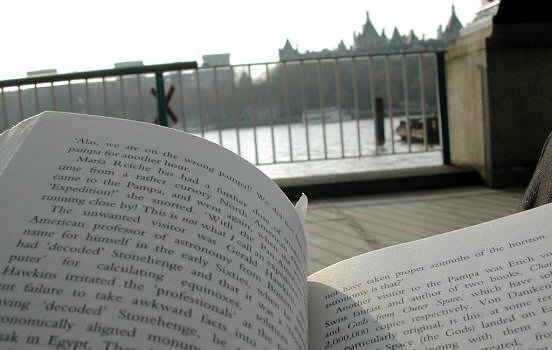 Reading Chatwin in London, long time ago.
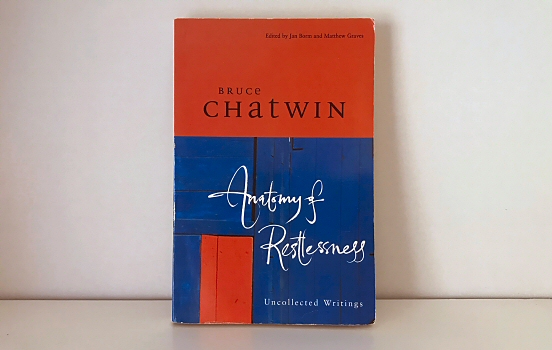
Anatomy of Restlessness was assembled after Chatwin’s death in 1989 and consists of previously unpublished stories, essays and fragments. That should probably come with a warning label. Posthumous collections can sometimes resemble somebody sweeping the floor of a dead writer’s study and publishing whatever turns up. Fortunately, there is plenty here worth finding.
I’ve read most of Chatwin’s books, and recommending just one is difficult because each has its own peculiar flavor. In Patagonia is probably his best-known work, and parts of it are magnificent. But for me, Anatomy of Restlessness captures Chatwin particularly well: curious, intelligent, enthusiastic and occasionally infuriating.
If you want to dig deeper into the strange, contradictory and endlessly fascinating character behind the books, Nicholas Shakespeare’s eponymous biography of Chatwin is also well worth reading.
Comments
No comments yet.
Leave a reply