Sicily is one of those places where history didn’t just happen. It piled up in layers. Every empire that looked at a map of the Mediterranean eventually decided this island had to be theirs.
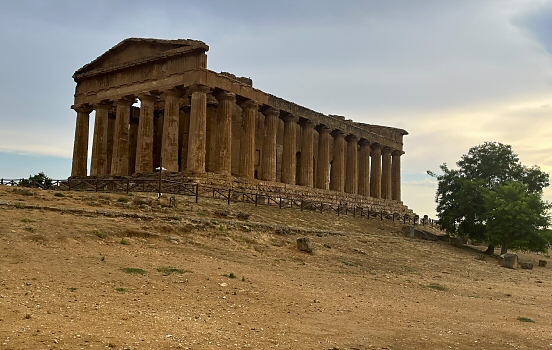 Greek temple of Concordia in Agrigento.
The Phoenicians arrived more than three thousand years ago, settling the western coast. Peace, as usual around here, proved temporary. Greeks followed around 750 BC, establishing colonies for the Magna Graecia. Syracuse and Agrigento grew into places that rivaled Athens itself, where philosophers debated, merchants prospered and temples climbed toward the sky.
Then Rome came calling. When Syracuse fell in the siege of 212 BC, Sicily became another prize in an empire that never seemed satisfied.
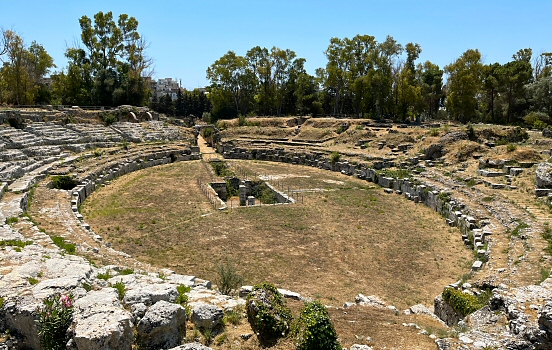 The Roman amphitheatre of Syracuse.
Of course, Rome wasn’t eternal either. After the Western Roman Empire collapsed, Sicily became the sort of place where armies came and went with exhausting regularity. Germanic tribes swept across the island before the Byzantines reclaimed it, bringing Greek language and culture back with them. For a brief moment, Syracuse even served as the capital of the Byzantine Empire. History has a habit of making improbable detours.
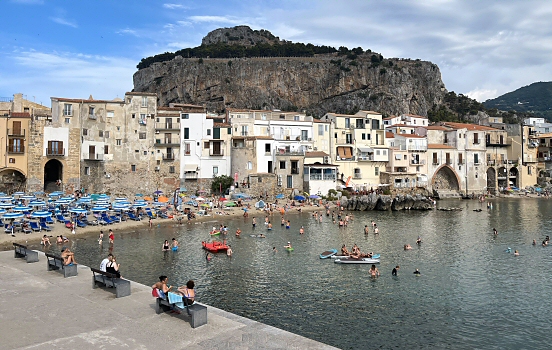 The Norman castle ruin towers above the city of Cefalù.
The Arabs arrived in the 9th century and left marks that never really disappeared. Citrus groves, irrigation, spices, sweets and words still linger from their centuries here. Then came the Normans, completing their conquest in 1091. Rather than erase what came before, they layered their own traditions on top, creating an island where Arab craftsmanship, Norman ambition and Byzantine artistry somehow ended up sharing the same churches and palaces.
The centuries that followed brought Spanish viceroys, Austrian Habsburgs and the Bourbon dynasty. Napoleon never managed to claim the island, but British influence arrived anyway. Sicily has always attracted outsiders convinced they knew what was best for it.
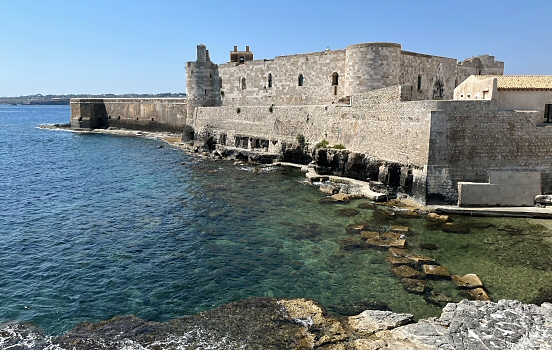 Castello Maniace in Syracuse.
Fast forward through all that glorious chaos, and here I am, contributing absolutely nothing to history beyond a determined effort to consume an irresponsible number of cannoli. Every generation has its calling.
As I roam around the island, I notice that the past refuses to stay in museums. It lives in weathered temples still standing, in Norman cathedrals with Arabic ceilings, in recipes perfected over centuries of conquest and coexistence. Ruins tell the tale of how they lived, spices speak of the food they had, and the art visualize their dreams and nightmares.
Even tiny details can reveal a story. The colorful Moor’s heads pottery, testa di moro, are seen all over the island, peering from balconies and shop windows. They speak an ancient myth of love and revenge set in Palermo during 11th-century Arab rule, but these days many of them are just as likely to unceremoniously end up wrapped in plastic for the flight home.
Few places wear their history so openly. Sicily doesn’t hide the fingerprints of those who conquered it. It simply absorbed them, folded them into its own identity, and carried on. I can’t help wondering what layer future generations will add to this remarkable island.

Comments
No comments yet.
Leave a reply