Bruce Lawson is one of my favorite technical speakers. Smart, funny, opinionated, and refreshingly unlikely to make you regret entering a conference room. So it was good to catch him at the @media conference in London this summer.
A few days ago he wrote HTML5 Semantics, a useful tour through the current state of semantics as of November 2011. And yes, “the current state of semantics” sounds like something discussed by elderly philosophers over single malt, but this is the web. We have our own peculiar ways of suffering.
Bruce’s article also provides a nice counterweight to Divya Manian’s provocatively titled Our Pointless Pursuit Of Semantic Value, which raised a few eyebrows, and presumably caused several standards enthusiasts to clutch their HTML5 specifications a little tighter. The piece was at least partly tongue-in-cheek, as Divya later acknowledged in the comments. Fair enough. Sacred cows are usually improved by the occasional kick.
Jeremy Keith subsequently weighed in with his own response, and suddenly we had what the web does best: intelligent people arguing passionately about markup.
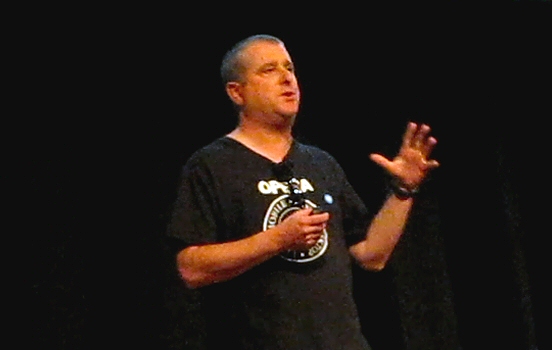 Bruce Lawson in London 2011.
Five years ago, in Why Web 3.0 will fail, I was fairly pessimistic about semantics. Andy Budd, a web standards veteran and presumably owner of several impeccably structured div elements, was even less optimistic when he wrote about semantic coding seven years ago.
And here we are. The dream remains wonderfully simple: describe content according to what it means, rather than what happens to make it look pretty on a screen. Machines understand it better. Accessibility improves. Search engines have more useful clues. Developers inheriting your code might even refrain from hunting you down.
In practice, of course, the web is built by human beings. Human beings have deadlines. And deadlines have a remarkable ability to turn elegant semantic ideals into a pipe dream.
Proper semantic markup still has a long way to go. Probably a very long way. But compared with the wilderness of a few years ago, things are at least moving in the right direction. Slowly. Argumentatively. Occasionally kicking and screaming. Which, when it comes to web standards, probably counts as progress.
Comments
No comments yet.
Leave a reply