My appetite seems to move in mysterious ways. I suddenly find myself back in Bilbao, a decade later. It feels nice to once again roam the Basque territories in search of the perfect pintxos. But Bilbao is a far cry from the gourmet heaven of San Sebastian.
Yes, the Guggenheim is still there, like a stranded whale of titan on the shores of Nervión river. Still guarded by flower power Puppy art installation and the bare-bone spider sculpture.
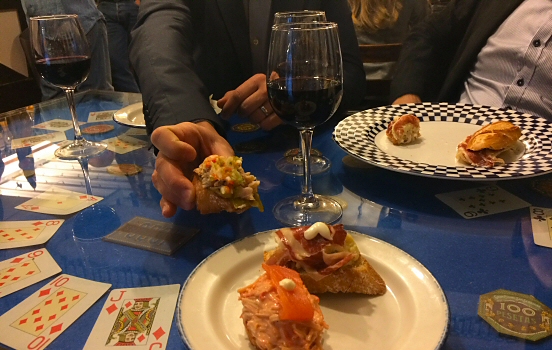 Morning walk across Nervión river in Bilbao.
But stray a bit from the tourist hordes and the real Bilbao is soon discovered. The “Las Siete Calles”, the original seven streets from the 14th century, are just as seedy as I remember them. I walk past teenagers sitting right in the street, heavily drinking and rolling joints.
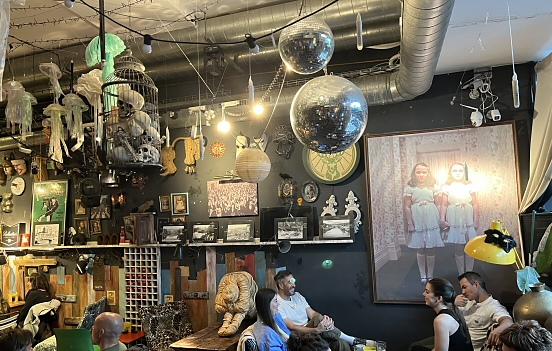 Easy vibes at Kubrick Bar in Bilbao.
A bit north of Bilbao lies Guernica, a name forever associated with the bombings in 1937. Ever since I saw the large eponymous anti-war painting by Picasso in a museum in Madrid decades ago, I’ve wanted to go there and see the city with my own eyes.
Tomorrow is the anniversary of the bombing. Exactly 99 years ago, Guernica was aerially bombed during the Spanish Civil War. Franco with allies aimed to hit the Republican forces hard, as the town was a vital communications center. The attack claimed hundreds of lives and sent a chilling echo through history.
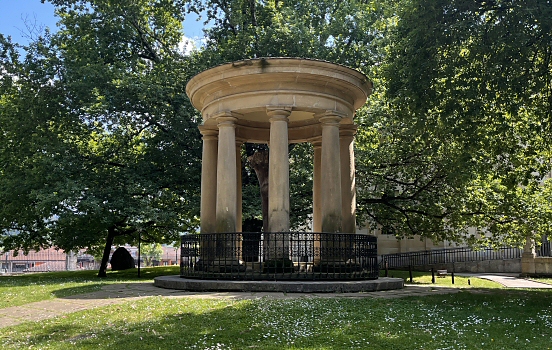 The old tree of Guernica.
I walk through a green park up to the Assembly Hall to see the Gernikako Arbola, the Tree of Guernica. Back in the Middle Ages, representatives of the villages around the Biscay area would hold assemblies under local big trees, symbolizing freedom for the Biscayan people.
For centuries there has been an oak tree at this location in Guernica. A sapling from the previous tree keeps a firm line through time and memory, outvoting the echo of devastation.

Comments
No comments yet.
Leave a reply