For decades, the world had been getting smaller. Cheap flights, crowded airports and an endless procession of tourists armed with smartphones and an inflated sense of adventure. We had turned international travel into something as mundane as ordering a pizza. Then, almost overnight, the whole damn thing came crashing down.
Welcome to 2020. The year the world stopped moving.
The travel industry had already been taking a beating. In 2019 the climate movement gained serious momentum, introducing the concept of “flight shame” into the public consciousness. Suddenly, hopping on a plane for a weekend of cheap beer and questionable decisions wasn’t quite as socially acceptable as it used to be.
And just as the airlines were beginning to grapple with their environmental image problem, Covid-19 arrived like Ivan Drago in a particularly foul mood and delivered a sucker punch.
To be fair, the warning signs had been there for years. Global air traffic had been growing relentlessly, with projections suggesting that the skies would only become more crowded. The environmental consequences were hardly a mystery. We simply preferred not to think about them while sipping complimentary wine at 35 000 feet.
It took activists like Greta Thunberg to drag the uncomfortable truth into the spotlight. Others had been considerably less diplomatic. In his 2015 book Learning to Die in the Anthropocene, Roy Scranton made a compelling argument that humanity had already managed to thoroughly screw itself. Not exactly uplifting bedtime reading, but difficult to dismiss.
And still, the planes kept flying. Until a microscopic virus accomplished what decades of environmental warnings, international conferences, and increasingly desperate appeals to common sense had failed to achieve. It grounded the world.
I remember the dot-com bubble bursting twenty years ago. I was there, watching the software industry go from champagne-fueled optimism to collective panic as fortunes evaporated and supposedly revolutionary companies disappeared overnight. Now I’m watching another industry stare into the abyss, and I can’t help wondering what will be left of the travel industry when the dust finally settles.
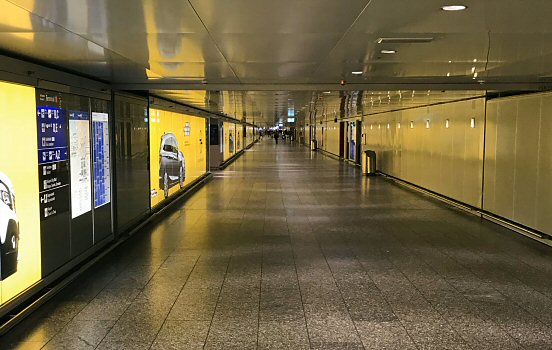 I never thought I’d say this, but I even miss the familiar stench of Frankfurt airport.
Veteran travelers like Richard Quest and George Downs have been documenting their experiences navigating this strange new reality. Empty terminals, masked passengers, deserted lounges and enough safety protocols to make an airport resemble a biological containment facility.
It’s like wandering through the opening scenes of a Hollywood disaster movie, except the credits never roll and nobody seems particularly confident about how the story ends. For airlines, hotels, tour operators and countless businesses dependent on the steady migration of humanity around the planet, the situation is nothing short of catastrophic.
But there’s another curious species facing an existential crisis: the professional traveler. What happens to the travel bloggers, Instagram influencers and digital nomads whose livelihoods depend on perpetually being somewhere else? What happens when the world suddenly decides that staying home is not merely advisable, but practically a civic duty? It’s difficult to sell the dream of endless adventure when your most exotic destination is the local supermarket.
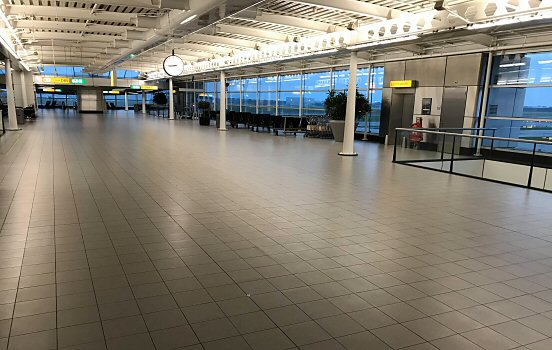 Lonely times at Schiphol airport.
Some have embraced the situation with admirable optimism. Chris Guillebeau and Rolf Potts have offered thoughtful reflections on using this enforced downtime productively. Write that book. Reconsider your priorities. Find meaning in the stillness.
All perfectly sensible advice. Unfortunately, sensible advice doesn’t pay the rent. Pete Rojwongsuriya has described the devastating impact of the pandemic on his travel-related income, while Leif Pettersen has gone so far as to contemplate the the death of travel writing itself.
It’s a grim prospect for those of us who have spent years believing that the world is best understood by actually getting out there and experiencing it. Reality is a cruel mistress.
The travel industry has always sold freedom. Freedom to discover and reinvent yourself somewhere far away from the familiar routines of home. Now that freedom comes wrapped in uncertainty, government restrictions and the distinct possibility of spending two weeks in quarantine. The question is no longer simply when we’ll travel again. It’s whether we’ll ever travel quite the same way.
 The glossy facade is fading in Helsinki airport.
Travel is an inherently social activity. Airports, aircraft cabins, railway stations, crowded markets, bustling restaurants and questionable bars where strangers become temporary friends over drinks of uncertain origin. The very things that make traveling interesting are now considered potential health hazards. Human proximity, once part of the adventure, has become something to avoid.
And there’s something particularly surreal about experiencing the first global pandemic of the social media age. Billions of people, isolated in their homes, watching the same unfolding catastrophe through an endless stream of news updates, statistics, conspiracy theories and unsolicited opinions from people who barely passed high school biology. Suddenly everyone is an outspoken expert in epidemics and public health.
Meanwhile, concerts have disappeared, sporting events have been cancelled and the simple pleasure of sitting in a crowded restaurant has become an act of questionable judgment. The world hasn’t ended. It has simply become a considerably less interesting place. Perhaps the most unsettling part is how quickly we’re getting used to it.
To add insult to injury, all this is slowly turning into the new normal as we are silently shifting our baselines.
I don’t know what travel will look like when this is over. Nobody does, regardless of how confidently they pretend otherwise. But I do know one thing. It’s July 2020, and we’re all trapped in an episode of Black Mirror that has long since overstayed its welcome.
Related posts
Comments
No comments yet.
Leave a reply