Movies have always been exceptionally good at lying to us about the world. Watch enough of them and you could reasonably conclude that Paris exists entirely in golden afternoon light and New York is populated exclusively by attractive people with suspiciously large apartments.
Travel destinations in movies are rarely places. They’re ideas. When the hero arrives in some exotic city, there’s generally no pollution, grinding poverty, scaffolding, traffic jams or miserable weather. The light is perfect. The streets are picturesque. Everyone appears to have received advance notice from the cinematographer. As Norwegian band a-ha once observed, the sun always shines on TV. But reality, inconvenient bastard that it is, has other plans.
Then there’s the green screen. Once upon a time, you could spot one immediately. Actors supposedly standing on a Himalayan mountaintop looked suspiciously like people standing three meters from a plywood wall in Burbank. Today the technology has become good enough that actors can apparently travel halfway around the planet without leaving the comforting proximity of their trailer.
I wrote about some particularly impressive examples earlier in The magic of green screen. The line between location and illusion is becoming increasingly difficult to find, which is probably exactly how Hollywood likes it.
Sometimes, though, the misconceptions are deliberate. Like EuroTrip and its depiction of Bratislava. Our four unfortunate travelers accidentally end up there instead of Berlin and discover what appears to be a bombed-out post-Soviet wasteland populated by lunatics, stray dogs and people willing to perform almost anything for a handful of American cents. It enthusiastically grabs every possible Western European prejudice about Eastern Europe, stuffs them into a sack, beats the sack with a shovel and calls the result Bratislava.
Sometimes cinematic prejudice lands uncomfortably close to familiar stereotypes. In Snatch, Avi returns to the United States after visiting London and is asked by customs:
“Anything to declare?”
“Yeah. Don’t go to England.”
Later comes the wonderfully harsh summary of London: “Yes, London. You know: fish, chips, cup ‘o tea, bad food, worse weather, Mary fucking Poppins…”, which caused laughs from the three Swedes at a London cinema, while the rest of the audience did not. Apparently stereotypes become considerably less amusing when you’re sitting in the country being stereotyped.
 Bratislava for real.
Then, occasionally, reality manages to make fiction look restrained. Consider the infamous tourism video for Cleveland. Shot under skies apparently designed by Soviet municipal architects, it presents the city with all the seductive glamour of a wet Tuesday afternoon in an industrial estate. Yes, it’s a joke. But somewhere between the gray streets and the aggressively modest ambitions, you begin wondering whether Cleveland’s tourism department might have preferred another joke.
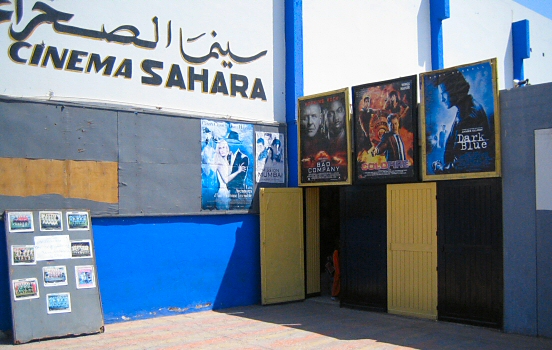 Finding a dubious cinema in Morocco.
Another example is Victor’s whirlwind trip through Europe in The Rules of Attraction. It’s travel compressed into a deranged montage of sex, drugs, monuments, bad decisions and Europeans behaving badly. Essentially the Grand Tour rewritten by someone with a cocaine problem and no interest whatsoever in museums. It is Europe at its best and worst, seen through a decadent, misogynistic lens and played with the fast-forward button jammed down.
Pure fiction, obviously. Although anyone who has traveled cheaply around Europe while young, drunk and catastrophically optimistic may recognize more of it than they’d care to admit.
But if you like the concept, check out these videos where it’s made in real world: Denver to Singapore (and back) in 5 minutes by David DAngelo and Melbourne To London with a Wideangle Lens by Tom Blachford.
And that, perhaps, is the interesting thing about movies and travel. They lie. They simplify cities into clichés, remove the ugly bits, exaggerate the exotic ones and occasionally replace the entire country with a green screen in California. But sometimes the lie contains just enough truth to stick. And years later, when you finally arrive in the real place, part of you is still looking for the city you saw on the screen. Usually right up until it starts raining.
Comments
No comments yet.
Leave a reply