Some books are best read in the place where they happened. I first opened The Terminal Man while waiting for a flight at Charles de Gaulle Airport in Paris. A concrete flying saucer that somehow manages to make brutalist architecture feel optimistic. Even if you’re only changing planes, it has a remarkable ability to convince you that you’ve made poor decisions in life.
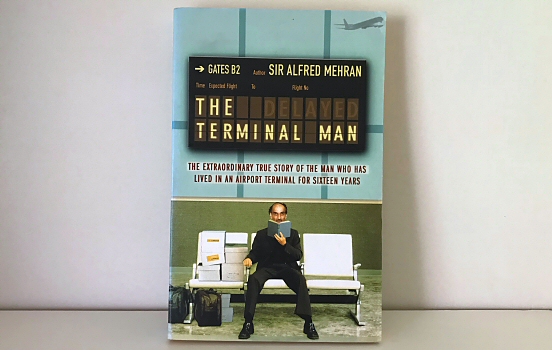
The book tells the story of Merhan Karimi Nasseri, the Iranian refugee who spent sixteen years living inside Terminal 1. Steven Spielberg turned his story into The Terminal 2004. Hollywood naturally sanded off most of the sharp edges. Reality is stranger, sadder, and considerably less photogenic.
After being expelled from Iran in 1975, Nasseri drifted across Europe for ten years until missing documents left him stranded at Charles de Gaulle. Unable to enter France and unable to leave, he became part of the furniture. Airport staff brought him food, helped with his laundry, and eventually donated the now-famous red bench that became his home.
The strangest twist comes later. When he was finally offered the paperwork that would have allowed him to leave, he didn’t. All those years inside an airport had become a life. Freedom had turned into just another destination he no longer knew how to reach.
It’s a story that swings wildly between tragedy and absurd comedy. At first you sympathize with Nasseri. Then you start laughing at the ridiculous situations. Eventually the laughter catches in your throat, because you realize the airport is no longer the prison. Habit is.
Nasseri finally left Charles de Gaulle in 2006, after being hospitalized. The bench remained, quietly waiting for the next traveler with a delayed flight and too much time to think.
While wandering through Terminal 1 back in 2004, I spotted his famous red bench. It looked surprisingly ordinary. That’s probably the most unsettling part of the whole story. History doesn’t always leave monuments. Sometimes it leaves an empty seat next to a numbered gate.
5 comments
Leave a reply