Five years ago, the world changed. So did the web. On September 11 2001, millions of people did what we had already learned to do whenever something terrible happened: we went online looking for answers. The web, unfortunately, wasn’t quite ready for us.
I remember that day vividly. As the scale of what was happening became clear, the major news sites were hammered by millions of frightened, confused people refreshing their browsers and trying to understand the incomprehensible. Servers buckled. Pages stopped loading. The polished portals of the day, heavy with graphics, navigation, and banners that suddenly became liabilities.
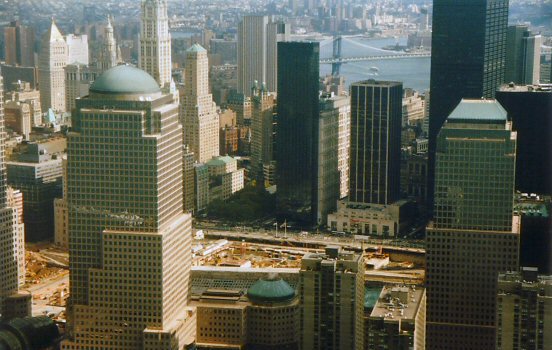 Ground Zero in New York 2002, as I saw it from a helicopter.
One by one, the news sites began stripping themselves down. Images disappeared. Layouts vanished. What remained was brutally simple HTML: headlines, text, links. Information without the furniture. It was an accidental lesson in web design delivered under the worst imaginable circumstances. When everything else becomes irrelevant, content wins.
But by then, people had already begun looking elsewhere. Survivors, witnesses, relatives and ordinary people caught up in the events turned to personal websites and online journals. They wrote about what they had seen, what they knew, who they were searching for, and what they had lost.
These early blogs offered something the large news organizations couldn’t: proximity. No helicopter shot from several miles away. No correspondent standing behind police tape repeating what little had been confirmed. Just people, typing. Sometimes badly. Sometimes emotionally. Sometimes inaccurately. But they were there.
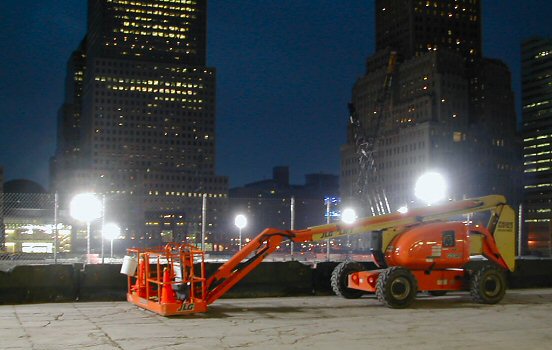 Ground Zero in New York 2002.
A few years later, I found myself in a hotel room in San Francisco watching television as Hurricane Katrina tore through New Orleans. Back then, the traditional media had spent years treating blogs as the slightly embarrassing relatives of journalism. Unreliable, amateurish and best kept away from the good silverware.
Suddenly those same television networks were showing blog posts and Flickr photographs on air. Material created by ordinary people inside the disaster was being broadcast around the world because, quite simply, it showed things the television crews couldn’t. The amateurs had somehow wandered into the newsroom. And they were useful.
There is a certain grim pattern to technological change. Industries can dismiss something for years as trivial, dangerous or ridiculous. Then reality arrives carrying a baseball bat.
September 11 demonstrated how fragile the centralized web could be when everyone needed it at once. Katrina demonstrated the value of millions of people being able to publish their own accounts, photographs and observations without waiting for permission from an editor.
Neither made blogs trustworthy by default. Giving everyone a printing press does not magically give everyone good judgment. It does, however, give everyone a printing press. And that turned out to matter.
Five years after 9/11, the blogosphere is flourishing. What was once dismissed as online diary-writing has become part of the media landscape. News no longer travels exclusively from reporter to newsroom to audience. Sometimes it comes from a stranger with a camera, an internet connection and the good fortune (or terrible misfortune) to be standing exactly where history happens. The gatekeepers are still there. There are just a lot more gates now.
Comments
No comments yet.
Leave a reply