A short time after the shutdown of WaSP, another familiar piece of the web is being escorted behind the shed. Google announced today that Google Reader will close on July 1st.
There are alternatives, of course. There are always alternatives. The technology industry is very good at assuring you that the thing you loved and used every day can easily be replaced by something almost as good, provided you don’t mind creating another account, learning another interface and pretending this is progress.
But the death of Google Reader raises a larger and slightly more uncomfortable question: Is RSS dead?
For anyone fortunate enough not to know what RSS is, it stands for Really Simple Syndication. Que? It’s a lightweight, XML-based format for distributing and collecting content from around the web. In less nerdy terms, it lets you subscribe to a bunch of websites and read their latest updates in one place.
No algorithms. No sponsored posts. No cheerful machine deciding that because you once clicked on an article about bicycles, your remaining years should be spent looking at bicycles. Just the stuff you asked for. It was a remarkably civilized arrangement.
RSS readers made it possible to follow hundreds of blogs and news sites without visiting every one individually. Naturally, this presented a problem for publishers who rather liked page views, advertising revenue and the comforting sight of visitor statistics climbing upward. So many feeds began serving excerpts instead of complete articles, forcing readers back onto the website to finish their meal. Everybody has to eat.
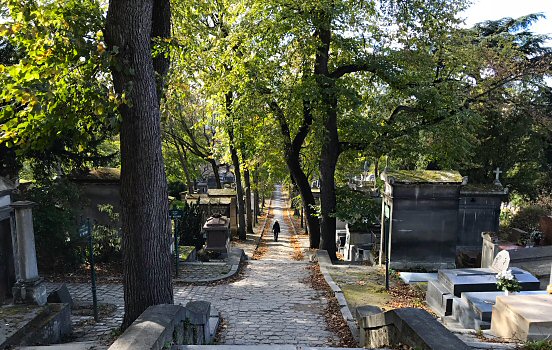 Life goes on at Père-Lachaise cemetery in Paris.
RSS enjoyed a good run, but it probably suffered from one fatal flaw: it looked slightly technical. You had feeds. You had XML. You had mysterious little orange icons. Somewhere in there lurked the terrifying possibility that a normal human being might have to understand what a URL was.
Then Facebook and the other social networks arrived. They offered something much easier. Follow your friends, follow some pages, sit back and let the machine shovel an endless stream of photographs, links, status updates and digital debris toward your face. There were buttons, notifications, likes. Bells and whistles. Shiny objects everywhere. RSS, by comparison, sat quietly in the corner with a newspaper and a cup of coffee, minding its business. It never really stood a chance.
I started using RSS readers about a decade ago, first with Bloglines and later with Google Reader. Reader was never glamorous, it simply did one job and did it very well. Open it, scan the feeds, read what interested you, move on with your life. Apparently this sort of restraint is no longer considered a viable business model.
Today, RSS feeds and aggregators seem increasingly like artifacts from an earlier web. A web where people deliberately chose which sites they wanted to follow instead of surrendering that decision to a proprietary social network.
Which leads inevitably to another cheerful question: Are blogs dying too? Probably not yet. Give it a few years.
There is something depressing about watching useful pieces of the web disappear. Not because everything old deserves to survive. Plenty of old technology belongs in a shallow grave with Flash intros, blinking text and websites that automatically start playing music. But Google Reader worked. It was simple and useful.And now it is going away because somewhere, in some meeting room, somebody looked at a spreadsheet and decided its continued existence no longer made enough sense.
Such is life on the web. Old things disappear. New things replace them. Yesterday’s indispensable service becomes tomorrow’s broken link. We sweep away the rubble, admire whatever shiny new thing has arrived and convince ourselves that this is evolution. Maybe it is. But I’ll still miss Google Reader.
3 comments
Leave a reply