On the Road is Jack Kerouac’s 1957 hymn to movement, caffeine, jazz, drugs, automobiles and the persistent belief that whatever you’re looking for is probably somewhere over the next state line.
Kerouac and his fellow Beat Generation misfits tear back and forth across America with no particularly convincing destination in mind. They drink, smoke, talk, hitch rides, fall in love, fall out of love and generally behave like people who have discovered that conventional adulthood looks suspiciously like a trap. And somehow, out of all this magnificent irresponsibility, came one of the defining books of the Beat Generation.
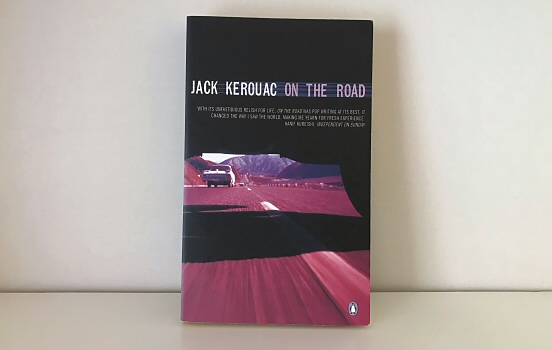
Look past the romantic mythology, On the Road is also the story of a generation that doesn’t quite know what to do with itself. The war is over, America is busy building suburbs and respectable lives, and Kerouac’s characters want none of it. They drift across the country chasing experience for its own sake, convinced that motion itself might provide an answer.
Although the book is fiction, Kerouac barely bothered disguising reality. The characters were based heavily on the people around him: writers, poets, hustlers, addicts, intellectuals and assorted human wreckage who would later become legends of the Beat movement.
The original manuscript has become almost as famous as the book itself. Kerouac supposedly hammered it out on a continuous paper scroll roughly 36 metres long, presumably because stopping to change sheets of paper was far too bourgeois. The uncensored scroll version was eventually published in 2007 for the book’s 50th anniversary, restoring real names including Neal Cassady, Allen Ginsberg and William S. Burroughs.
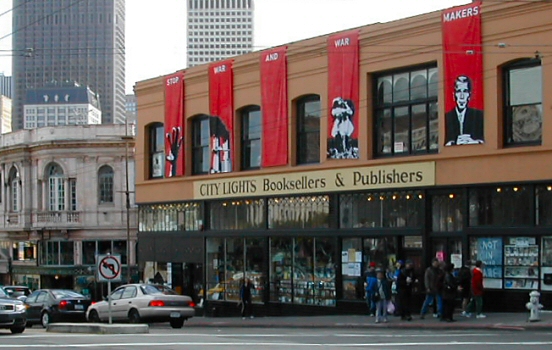 City Lights bookshop.
I once made my own small pilgrimage through Kerouac territory in San Francisco. I visited City Lights at 261 Columbus Avenue, the legendary bookstore and publisher forever tangled up with Beat history. Next door is Jack Kerouac Alley, because San Francisco understands that dead writers eventually become street furniture. I also walked past 29 Russell Street, where Kerouac stayed with Neal and Carolyn Cassady while working on the book.
There is something pleasingly ordinary about these places. No thunderbolts. No ghost of Kerouac staggering around North Beach whispering revelations about America. Just buildings, streets and a bookstore still selling dangerous quantities of literature.
On the Road certainly isn’t for everyone. It rambles. It repeats itself. Its characters can be selfish, exhausting and occasionally deserving of a firm slap. But perhaps that’s why it works. Travel isn’t always about finding yourself. Sometimes you find cheap coffee, a filthy bus station, somebody you probably shouldn’t trust and the uncomfortable realization that you still have absolutely no idea what you’re doing. And then you keep going.
If you care about travel, literature and the strange human compulsion to see what lies beyond the horizon, On the Road remains essential reading. Preferably somewhere far from home.
Related posts
Comments
No comments yet.
Leave a reply