Following the events of SXSW in Austin, the next logical stop was Las Vegas. Because apparently nothing says the future of the web quite like discussing CSS standards inside a casino resort where you can ride a gondola beneath an artificial Venetian sky.
For the last few days, the Venetian has been hosting MIX06, Microsoft’s gathering devoted to web technology, browsers and the increasingly ambitious collection of acronyms the company hopes will shape our online future.
Bill Gates opened the conference with the announcement of another beta of Internet Explorer 7, cleverly nicknamed seven. This one is supposedly feature-complete, which means the CSS implementation is essentially finished and web developers can finally start throwing their carefully constructed layouts at it to see what catches fire.
Gates also sat down on stage with Tim O’Reilly for a discussion that wandered into microformats. Yes, Microsoft talking about lightweight, standards-based web semantics. Strange things happen in Las Vegas, but let’s hope that they don’t stay there this time.
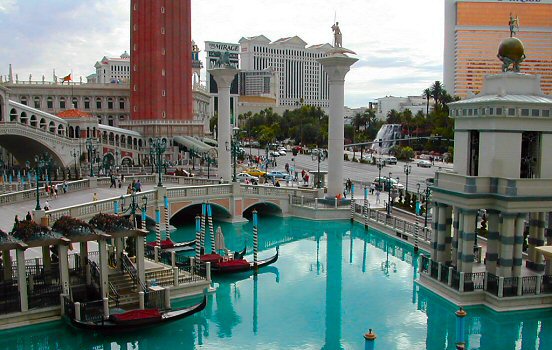 The Venetian in Las Vegas.
IE7 is expected to hit the fan this autumn without waiting for Windows Vista, which is probably just as well. There are limits to how long the web development community can survive on conditional comments, browser hacks and quiet despair. And the surprising thing? People don’t seem to hate it. Not even Dave Shea or Eric Meyer appear particularly eager to chase it out of town with torches and pitchforks. By Internet Explorer standards, this practically counts as a standing ovation.
Then there’s WPF/E (Windows Presentation Foundation Everywhere), because Microsoft has never encountered a perfectly good technology that couldn’t be improved with a longer name and an acronym requiring explanation. WPF/E is a portable subset of Windows Presentation Foundation, formerly known as Avalon, built around XAML and JavaScript. It also includes part of the .NET runtime, allowing C# and other managed code to escape the comfortable confines of Windows and infest other platforms. That’s the theory, anyway.
With Avalon, XAML and Atlas marching alongside it, Microsoft is assembling enough technology names for a respectable invasion force. IE7 will have native WPF support under Windows Vista, while the new March CTP of Atlas now comes with a license allowing the framework to be used in production applications. The marketing crusade cannot be far behind.
Another announcement was Microsoft Expression Web Designer, previously code-named Sparkle. It’s an upcoming Windows-only web design application built on WPF, with its own rendering engine and the ability to export to XAML. Most importantly, it isn’t simply FrontPage dragged from the crypt, given a haircut and sent back into polite society. Expression Web Designer is supposedly much stricter about web standards. Which sounds promising.
Of course, this is Microsoft, Internet Explorer and web standards we’re talking about. Trust is good. Testing is better.
Comments
No comments yet.
Leave a reply