What happens in a decade? On the Internet, apparently everything. Back in 2007, smartphones were barely a thing. There were no app stores, no tablets worth mentioning, and responsive design was still several years away from becoming the thing every client suddenly needed yesterday. The web lived mostly on desktop computers, viewed through browsers on screens that stayed obediently on desks.
Ten years later, there are around 2 billion smartphones in the world. The Internet has escaped the office and followed us into bed, onto trains, into restaurants and, regrettably, into bathrooms.
The web itself has changed along the way. It used to feel like one enormous, gloriously chaotic collection of interconnected hyperlinks, with millions of strange little doors leading somewhere else. Today it resembles a collection of privately owned kingdoms. Facebook, Instagram and the other walled gardens would prefer that you enter, make yourself comfortable and never leave.
Mobile usage overtook desktop usage back in 2014, although many businesses still see most of their customers, and particularly their conversions, coming from desktop computers. Apparently people are perfectly happy browsing products on a phone while standing in a supermarket queue, but when actual money is involved they still occasionally want a keyboard, a larger screen and the reassuring illusion that they know what they’re doing.
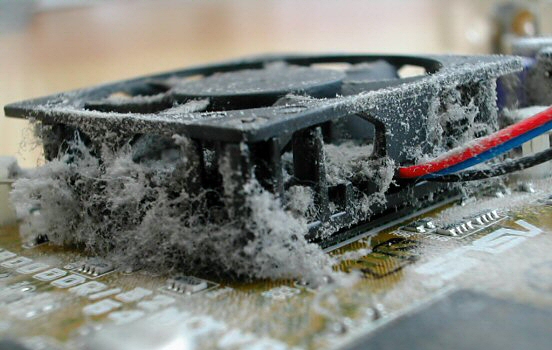 My old GeForce graphics card in the 1990s.
Software development has changed just as dramatically. Users now expect websites to load instantly, work flawlessly on whatever glowing rectangle happens to be in their hand, and provide interfaces as polished as native applications. Naturally, our response as developers has been to create an astonishing number of frameworks, libraries, build systems, package managers and assorted layers of abstraction.
Choosing the right framework can therefore feel less like engineering and more like wandering through a jungle armed with Stack Overflow, coffee and a rapidly deteriorating sense of optimism.
And just when you’ve finally chosen one, learned it, deployed it and convinced everyone that this is absolutely the correct technological direction, somebody announces a new framework on Hacker News. Naturally, it fixes everything. Until Thursday.
As Laurie Voss wrote in Are we making the web too complicated?: “The web is a shitshow of wheel reinvention and bad APIs. It’s also a blizzard of innovation.” That contradiction probably captures the industry better than anything else. We make things unnecessarily complicated, complain bitterly about the complexity, then invent three new tools to simplify it.
And somehow, against all reasonable expectations, the web keeps getting better. Because the web behaves much like a living organism. It grows, mutates, adapts and occasionally develops strange appendages nobody quite understands. Then we call them features.
Related posts
Comments
No comments yet.
Leave a reply