The term Web 2.0 may have been beaten to death by consultants, conference speakers and people with suspiciously expensive PowerPoint presentations, but there is something genuinely interesting underneath all the marketing debris: we are leaving increasingly large pieces of ourselves online.
We upload photographs to Flickr. We collect friends on Facebook. We write blogs, argue with strangers in forums, wander around virtual worlds and scatter comments, opinions and assorted digital evidence across servers on several continents.
All very entertaining. Until, of course, you die. Then what?
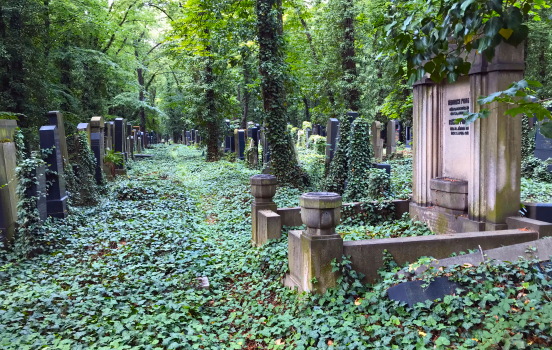 Life and death at New Jewish Cemetery in Prague.
What happens to the blogs? The photographs? The email accounts? Does it all remain there indefinitely, a little electronic ghost rattling around the Internet long after its owner has left the building?
The problem with online possessions is that they don’t sit conveniently in a box in the attic. They’re everywhere. A few photographs here. A blog there. A profile on some server you’ve completely forgotten about. Perhaps an abandoned character in an online game, still standing patiently in a tavern waiting for you to return.
It’s rather like dying with dozens of secret Swiss bank accounts, except most of them contain blurry photographs, old passwords and arguments about JavaScript. Not really Jason Bourne stuff, but still.
Admittedly, death isn’t the most cheerful subject for a Saturday afternoon. Most of us would rather consider lunch. But many of us make wills for our physical possessions. Maybe it isn’t completely absurd to think about what happens to the digital ones.
 Entrance to a cemetery in Gothenburg.
There is a social side to this as well. Many of us know people online whom we’ve never met in person. Friends from forums, communities, games and blogs. If someone suddenly disappears, those people may never know what happened. From their perspective, you simply stopped answering. Maybe you got bored. Maybe you changed your email address. Maybe you were eaten by wolves. The Internet is not particularly good at providing closure.
Then there is the material question. What happens to everything you’ve created? Are digital photographs worth preserving in the same way as boxes of old prints? Is a blog comparable to a diary? Should somebody keep it all online as an archive, or should the whole thing eventually disappear when hosting bills stop being paid and accounts quietly expire?
Some people might prefer their digital remains preserved. Others would want the whole embarrassing mess deleted before relatives discover that they were slaying pixel dragons online at three in the morning. Both positions seem perfectly reasonable.
So perhaps alongside the traditional instructions about houses, bank accounts and who gets the nice paperbacks, we need an addendum for online stuff. Because sooner or later we all go offline. The only question is whether our data gets the message.
What do you think? Do you care about your online presence after death?
Related posts
2 comments
Leave a reply